
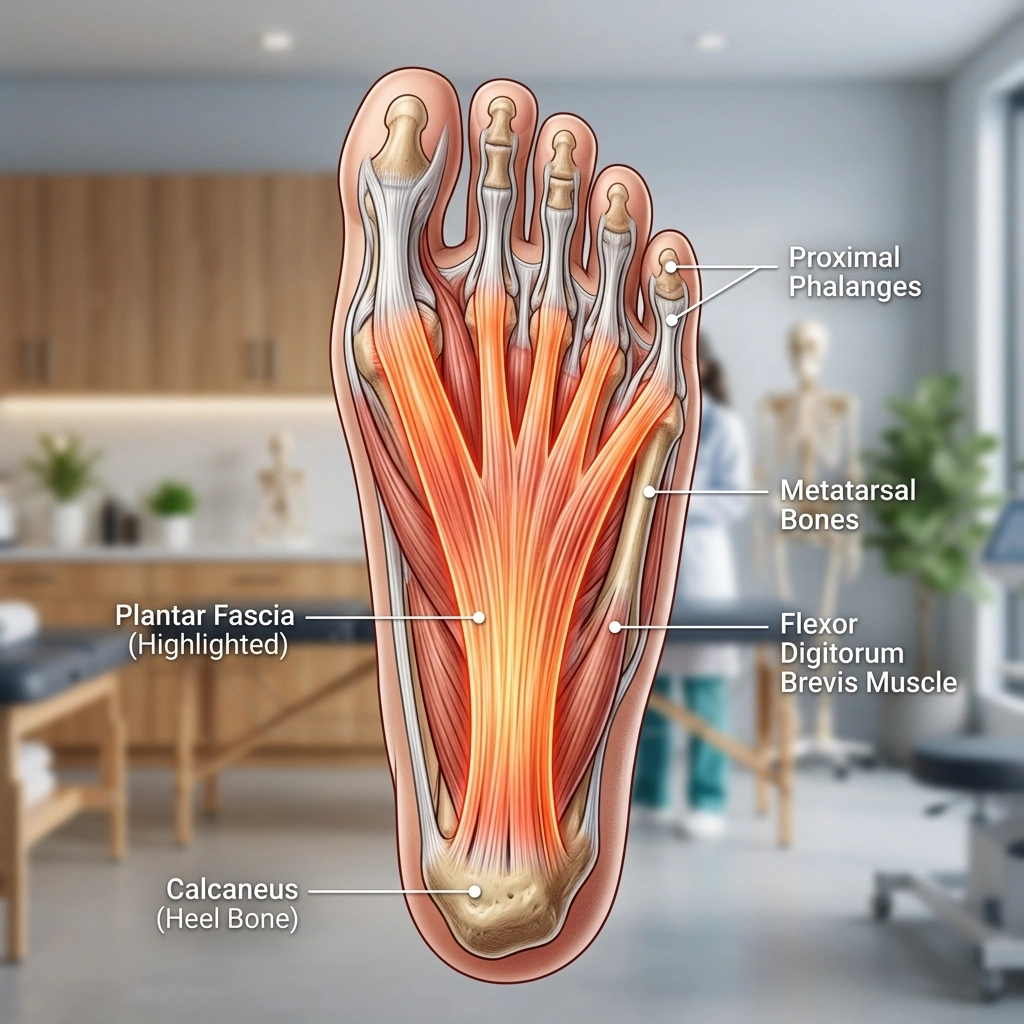
Plantar fasciitis is the leading cause of morning heel pain, stemming from microscopic tears and inflammation in the thick fibrous band of tissue connecting your heel bone (calcaneus) to your toes. Common triggers include flat feet, tight Achilles tendons, sudden increases in running mileage, and non-supportive shoes. According to Dr. Delvadia, podiatrist in Marietta at Podiatry Group of Georgia, over 90% of cases heal non-surgically using custom prescription orthotics, ice rolling, and targeted stretching.
Heel pain is one of the most common complaints among active adults, runners, and seniors alike. If you experience a sharp, stabbing pain on the bottom of your heel during your first steps out of bed in the morning, you are likely suffering from a condition called plantar fasciitis.
Plantar fasciitis is an inflammation of the plantar fascia—a thick, fibrous band of tissue that runs along the bottom of your foot, connecting your heel bone (calcaneus) to your toes. This tissue acts as a shock absorber, helping to support your foot's natural arch.
Key Symptoms of Plantar Fasciitis
- Morning Pain: Severe heel pain with the first few steps after waking up, which often subsides or dulls into an ache after walking around.
- Post-Rest Pain: Pain that flares up again when rising after long periods of sitting or standing.
- Exercise Pain: Pain that is felt after completing an exercise session or long run, rather than during the activity.
What Causes Plantar Fasciitis?
Plantar fasciitis is primarily caused by repetitive micro-tears in the ligament. These tears occur due to excessive stress, which can stem from several structural and lifestyle factors:
Biomechanical Imbalances:Low arches (flat feet) or excessively high arches alter the foot's shock absorption capacity, placing extra tension on the fascia. Tight Achilles tendons are another major biomechanical contributor.
Sudden Activity Changes: Transitioning to high-impact sports, increasing running mileage too quickly, or standing for long hours on hard concrete floors can strain the ligament.
Improper Shoe Support: Shoes with worn-out heels, thin soles, or inadequate arch support fail to stabilize the foot, exacerbating ligament stress.
Treatment and Recovery Options
Over 90% of plantar fasciitis cases resolve within a few months using conservative therapies. Early treatment is crucial, as chronic heel pain can lead to changes in your gait, causing knee, hip, or back pain:
Conservative Management: Daily stretching of the calves and Achilles tendons, ice rolling, and wearing supportive shoes can significantly reduce pain.
Custom Orthotic Support: Standard shoe inserts often fail to align the foot correctly. Custom-molded orthotics engineered at Podiatry Group of Georgia support your specific arch structure, offloading pressure from the plantar fascia insertion point. Read our guide on custom orthotics vs store insoles.
Advanced Therapies: For persistent cases, advanced clinical treatment protocols at our Marietta office speed up tissue healing and reduce inflammation without complex surgeries. Learn more about our specialized plantar fasciitis treatment in Marietta and comprehensive heel pain services.
Why Your Plantar Fasciitis Won't Heal (And What Actually Works)
If stretching, frozen water bottles, and pharmacy insoles have failed, your heel pain may have transitioned into chronic degenerative fasciosis. Read Dr. Delvadia's clinical guide on the barefoot-at-home habit, bone spurs, and our 90% to 95% non-surgical recovery roadmap.