
Navigation Menu
Preventative Diabetic Podiatry

Diabetic Foot Care & Ulcer Prevention in Marietta, GA

Protect your long-term mobility and prevent limb-threatening complications. Under the expert clinical guidance of Dr. Neha Delvadia, DPM, we offer comprehensive evaluations, neuropathy management, and gentle wound care at our Marietta office.

Quick Clinical SummaryDoctor-Reviewed by Dr. Neha Delvadia, DPM

What is Comprehensive Diabetic Foot Care?

Diabetic foot care at Podiatry Group of Georgia in Marietta, GA focuses on preventing diabetic foot ulcers, amputations, and neuropathy complications. Led by Dr. Neha Delvadia, DPM, our practice provides annual vascular circulation checks, sensory monofilament testing, sterile diabetic nail care, and custom offloading orthotics to protect limb health and ensure safe, pain-free daily mobility.

Diabetic Wellness

Partnering in Diabetic Health

Managing diabetes successfully means paying close attention to your feet. Neuropathy can make it difficult to feel small injuries like cuts, blisters, or embedded pebbles. At the same time, poor circulation delays the body's natural healing process. For residents of Marietta, East Cobb, and the greater Atlanta area, Dr. Neha Delvadia provides expert, localized care to monitor and manage these risks before they become emergencies.

Our Marietta practice is dedicated to early detection and conservative management of diabetic foot complications. We conduct thorough neurological monofilament testing and vascular checks to ensure your feet have adequate sensation and blood flow. We also address safe nail and callus care, and provide custom offloading orthotics to relieve high-pressure spots on the sole of your foot. Our ultimate goal is to keep our Marietta diabetic community active, healthy, and walking comfortably.

Key Care Principles
Annual Preventive Screenings
Advanced Wound Dressing Methods
Custom Offloading Insoles
Coordinates With Primary Physicians
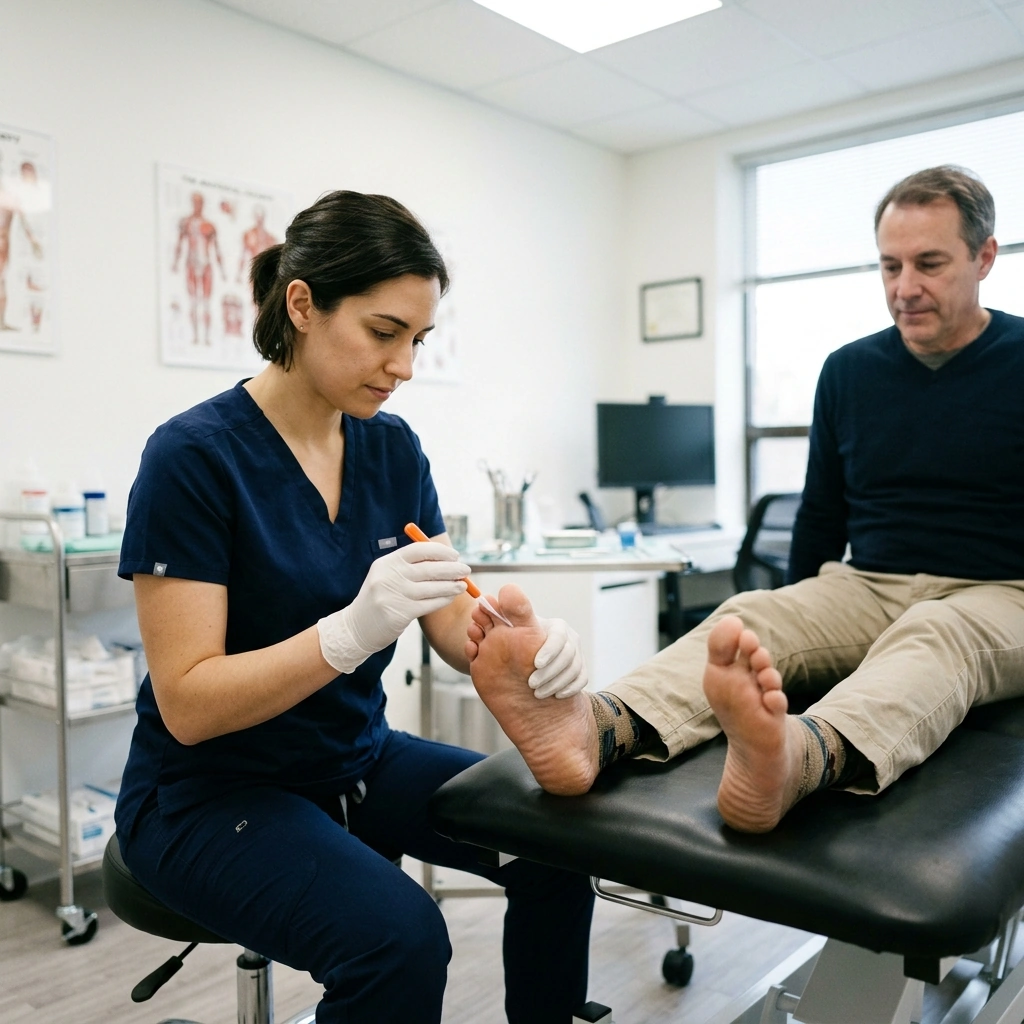
Clinical diabetic foot checkup by Dr. Delvadia examining circulation and nerve sensitivity - Podiatry Group of Georgia
Services Offered

Diabetic Foot Services We Offer

We provide the full spectrum of diabetic foot services, prioritizing preventative diagnostics and tissue protection to prevent complications.

Nerve Issues & Neuropathy

Monitors loss of protective sensation, burning pain, or numbness.

Diabetic Ulcers & Wounds

Expert debridement, sterile dressings, and advanced healing treatments.

Poor Peripheral Circulation

Addresses arterial health to ensure adequate blood flow for tissue healing.

Ingrown Toenails & Calluses

Safe, sterile removal of corns or calluses to avoid deep infections.

Learn More about Ingrown Toenails

Deformity Assessments

Evaluates bone structures for Charcot Foot, bunions, and hammertoes.

Learn More about Hammertoes

Comprehensive Screenings

Includes vascular blood flow checks and neurological monofilament testing.

Our Method

What to Expect During a Checkup

A comprehensive diabetic foot exam with Dr. Delvadia ensures early intervention for any vascular or neurological complications.

01

Circulatory & Nerve Checks

Assess nerve response, sensitivity, and vascular pulses to check blood supply levels.

02

Treatment & Cleaning

Safely trim thickened nails, remove dangerous calluses, or treat minor open cuts under sterile conditions.

03

Prevention Strategy

Dr. Delvadia recommends appropriate diabetic footwear, orthotic support, and daily care tips.

Diabetic Care FAQs

Common Questions About Diabetic Foot Care

Where can I get specialized diabetic foot care and wound management in Marietta, GA?

Podiatry Group of Georgia offers comprehensive diabetic foot screenings, peripheral neuropathy assessments, and wound care directly at our East Cobb location on Johnson Ferry Road, conveniently serving patients throughout Marietta, Roswell, Sandy Springs, and the greater Atlanta metro area.

Why is routine foot care and annual podiatric screening so critical for diabetics?

Diabetes can cause progressive peripheral neuropathy (nerve damage) and poor arterial circulation. Neuropathy prevents you from feeling minor blisters, cuts, or foreign objects, while restricted blood flow inhibits your body's natural healing process. Without routine podiatric monitoring, minor irritations can rapidly escalate into severe, limb-threatening diabetic foot ulcers.

Does Medicare or private health insurance cover diabetic foot exams and therapeutic shoes?

Yes. Medicare Part B and most private insurance plans cover annual comprehensive diabetic foot examinations, diagnostic vascular testing, and routine nail care for qualifying patients with documented neuropathy or circulatory impairment. Medicare also provides dedicated coverage for therapeutic diabetic shoes and custom protective inserts under the Therapeutic Shoes for Persons with Diabetes benefit.

What are the early warning signs of diabetic peripheral neuropathy in the feet?

Early symptoms of diabetic neuropathy include a “pins-and-needles” tingling sensation, burning pain in the soles (frequently worsening at night), sharp cramping, or a persistent feeling of numbness and loss of temperature sensation. If you experience any of these signs, prompt clinical sensory testing with Dr. Neha Delvadia is essential to prevent undetected injuries.

Why should diabetic patients avoid trimming their own toenails or removing calluses at home?

Diabetic patients with diminished sensation or compromised circulation face a high risk of accidental skin lacerations, micro-tears, and bacterial infections from over-the-counter clippers or chemical callus removers. Dr. Delvadia provides safe, sterile debridement of thickened nails, corns, and calluses to eliminate pressure points without breaking the skin barrier. For daily hygiene tips, read our diabetic foot care guide.

How do custom diabetic orthotics and offloading insoles prevent foot ulcers?

Repetitive high-pressure focal points on the bottom of the foot are the leading cause of diabetic skin breakdown and ulcer formation. Custom diabetic offloading orthotics are crafted with multi-density, shock-absorbing materials that redistribute body weight evenly across the entire plantar surface, shielding vulnerable pressure areas from friction and ulceration.

When should a diabetic foot sore, blister, or cut be treated as a medical emergency?

Seek immediate podiatric care if you notice an open wound that does not heal within 48 hours, active drainage, redness spreading around a lesion, localized heat, dark black/blue skin discoloration, or an unexplained fever. Rapid clinical intervention and sterile wound debridement are vital to prevent deep tissue infection and osteomyelitis (bone infection).