
Heel Pain in Marietta, GA — Find the Cause, Get Lasting Relief
Not all heel pain is the same. From sharp morning steps to deep bone aches, back-of-heel swelling, or youth sports limping, an accurate diagnosis is the critical first step. Led by Dr. Neha Delvadia, DPM, we provide same-day digital X-rays, biomechanical gait evaluations, and targeted non-surgical relief at our Marietta & East Cobb clinic.
Why Does Your Heel Hurt? Beyond Plantar Fasciitis
While plantar fasciitis causes approximately 80% of bottom-of-heel pain, persistent heel discomfort can also stem from Achilles tendinitis, calcaneal stress fractures, nerve entrapment (Baxter's nerve or tarsal tunnel), retrocalcaneal bursitis, or Sever's disease in active youth. Because treatments differ drastically—stretching helps fasciitis but can worsen an acute stress fracture or irritated Achilles insertion—an accurate differential diagnosis is critical. At Podiatry Group of Georgia in Marietta & East Cobb, Dr. Neha Delvadia, DPM uses hands-on biomechanical gait evaluations and in-office digital X-rays to pinpoint the exact structural cause of your pain on day one.
Why Misdiagnosing Heel Pain Delays True Recovery
Many patients spend months rolling their feet over frozen water bottles, trying supermarket gel insoles, or following generic online stretching routines without lasting relief. When generic home remedies fail, it is usually because the diagnosis itself was incorrect:
- Aggressive stretching benefits a tight plantar fascia, but over-stretching an irritated Achilles tendon insertion or retrocalcaneal bursa can worsen micro-tearing and inflammation.
- Hard massage balls and rolling apply hazardous point pressure if your heel pain is actually a calcaneal stress fracture, preventing bone healing.
- Generic soft insertsoften lack the biomechanical rigidity needed to correct abnormal pronation, failing to relieve tension on Baxter's nerve or the plantar fascia.
Led by Dr. Neha Delvadia, DPM, Podiatry Group of Georgia takes the guesswork out of heel rehabilitation. With in-office digital X-rays and hands-on gait evaluations, we identify the exact structural tissue in distress so your treatment starts working on day one.
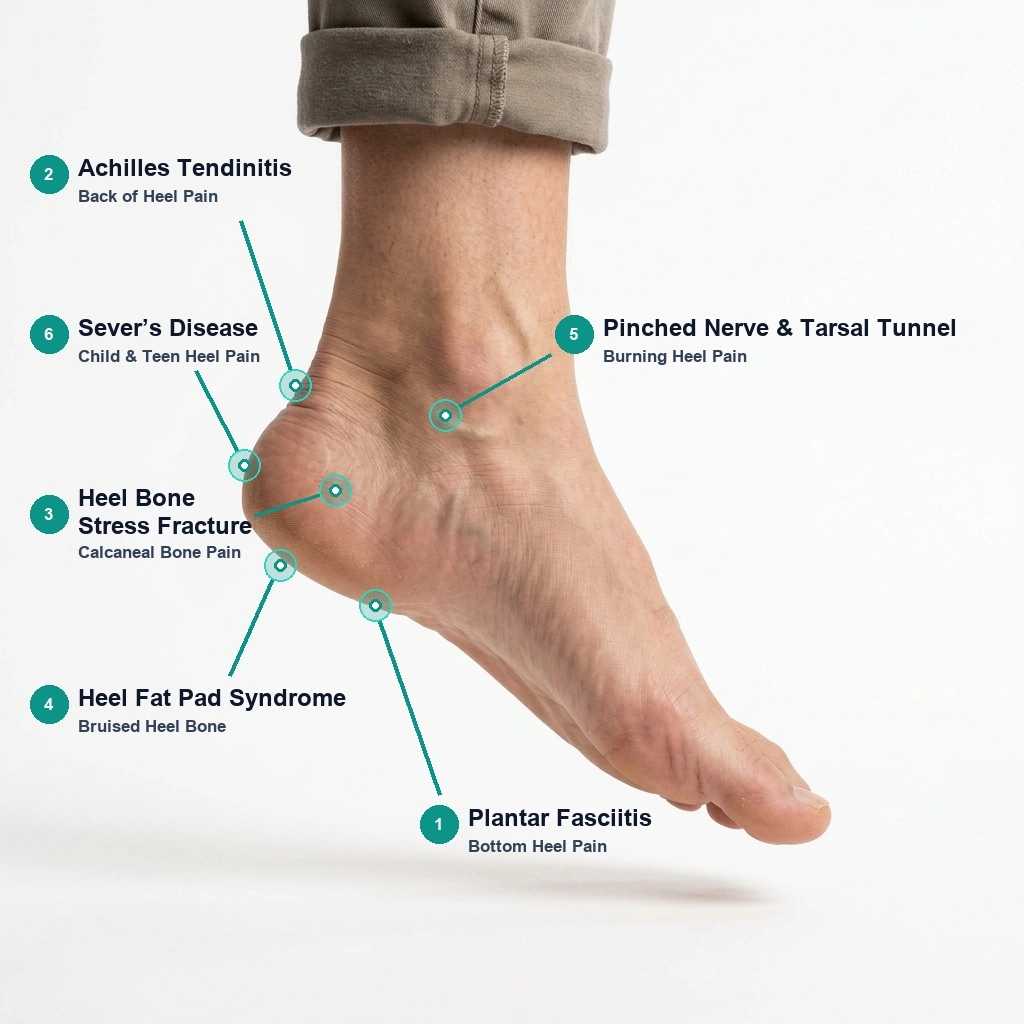
Where Does Your Heel Hurt?
Not all heel pain is plantar fasciitis. Compare your pain location, morning timing, and daily triggers below to identify what may be causing your discomfort:
Plantar Fasciitis (Bottom Heel Pain)
Sharp, stabbing pain during your first morning steps out of bed or when standing after sitting. Often eases slightly after walking, then throbs by evening.
Achilles Tendinitis (Back of Heel Pain)
Aching, tenderness, or a firm bony bump ('pump bump' / Haglund's) where the Achilles tendon attaches to the heel bone. Stiff after running or uphill walks.
Heel Bone Stress Fracture (Calcaneal)
Deep, persistent ache that intensifies continuously with weight-bearing. Sharp pain when gently squeezing both sides of the heel bone (positive calcaneal squeeze test).
Heel Fat Pad Syndrome (Bruised Heel Bone)
Deep, bruise-like ache directly beneath the center of the heel. Feels like walking directly on bare bone, especially when barefoot on tile or hardwood. Intensifies with prolonged standing.
Pinched Nerve & Tarsal Tunnel (Burning Heel Pain)
Burning, tingling, pins-and-needles, or electrical sensations radiating from the medial ankle along the bottom of the heel or into the arch.
Sever's Disease (Child & Teen Heel Pain)
An active child limping, toe-walking, or complaining of heel soreness during or immediately after soccer, basketball, track, or gymnastics.
Comprehensive Clinical Solutions for Heel Pain
Dr. Delvadia combines weight-bearing digital imaging with dynamic rearfoot biomechanical testing to resolve heel pathology at its structural root—without premature surgical intervention.
In-Office Digital X-Rays
Immediate weight-bearing digital views evaluate calcaneal alignment, detect bone spurs, rule out occult stress fractures, and inspect pediatric growth plates on day one.
3D Biomechanical Gait Analysis
Dr. Delvadia analyzes your dynamic strike phase and arch mechanics to isolate whether subtalar abnormal pronation or rearfoot varus is driving mechanical overload.
Prescription Custom Orthotics
Functional medical-grade devices fabricated from precise clinical impressions to deeply cup the calcaneus, redistribute plant-strike forces, and offload strained fascia.
Pediatric & Youth Heel Care
Growth-plate-conscious care for active kids and teens in East Cobb & Marietta suffering from Sever's disease, relieving growth apophysitis while keeping them active.
Non-Surgical First Philosophy
Over 90% of our heel pain patients achieve complete recovery without surgery through targeted offloading boots, structured splinting, and restorative therapies.
Long-Term Prevention Strategy
Dr. Delvadia provides personalized athletic footwear guidance, calf/fascia mobility regimens, and orthotic recalibration to prevent recurring heel flare-ups.
Your Diagnostic & Treatment Journey
A structured, evidence-based roadmap designed to pinpoint the cause and guide you back to comfortable, pain-free mobility.
Palpation & Biomechanical Exam
Dr. Delvadia pinpoints the exact anatomical structure in distress by testing focal tenderness, calf tightness, and walking mechanics.
In-Office Digital Imaging
High-resolution digital X-rays immediately rule out calcaneal stress fractures, assess heel bone spurs, and evaluate growth plate maturity.
Targeted Conservative Protocol
Receive a personalized plan tailored to your specific diagnosis—such as custom orthotics, boot offloading, night splints, or targeted injections.
Monitored Return to Activity
Progress through structured rehabilitation and gradual return-to-sport protocols, backed by long-term preventative footwear guidance.