
Hammertoe Specialist & Correction Surgery
Straighten buckled digital joints, prevent painful friction calluses, and restore comfort to every step. Advanced clinical and surgical care led by Dr. Neha Delvadia, DPM at our Marietta & East Cobb office.
Quick Summary: Hammertoe Causes & Correction
A hammertoe is a progressive digital contracture where muscle and tendon imbalances cause the toe to buckle at the middle joint, creating painful friction against footwear and thick corns. Related deformities include mallet toe (bend at the tip joint) and claw toe (curling at multiple joints). Flexible hammertoes may respond to custom orthotics, splints, and stretching. Once the joint becomes rigid, outpatient surgical realignment by Dr. Neha Delvadia, DPM at our Marietta office permanently straightens the toe using tiny internal implants, with most patients back in athletic shoes within 6–8 weeks. Diabetic patients require immediate care to prevent friction-induced ulcers.
Hammertoes & Digital Contractures
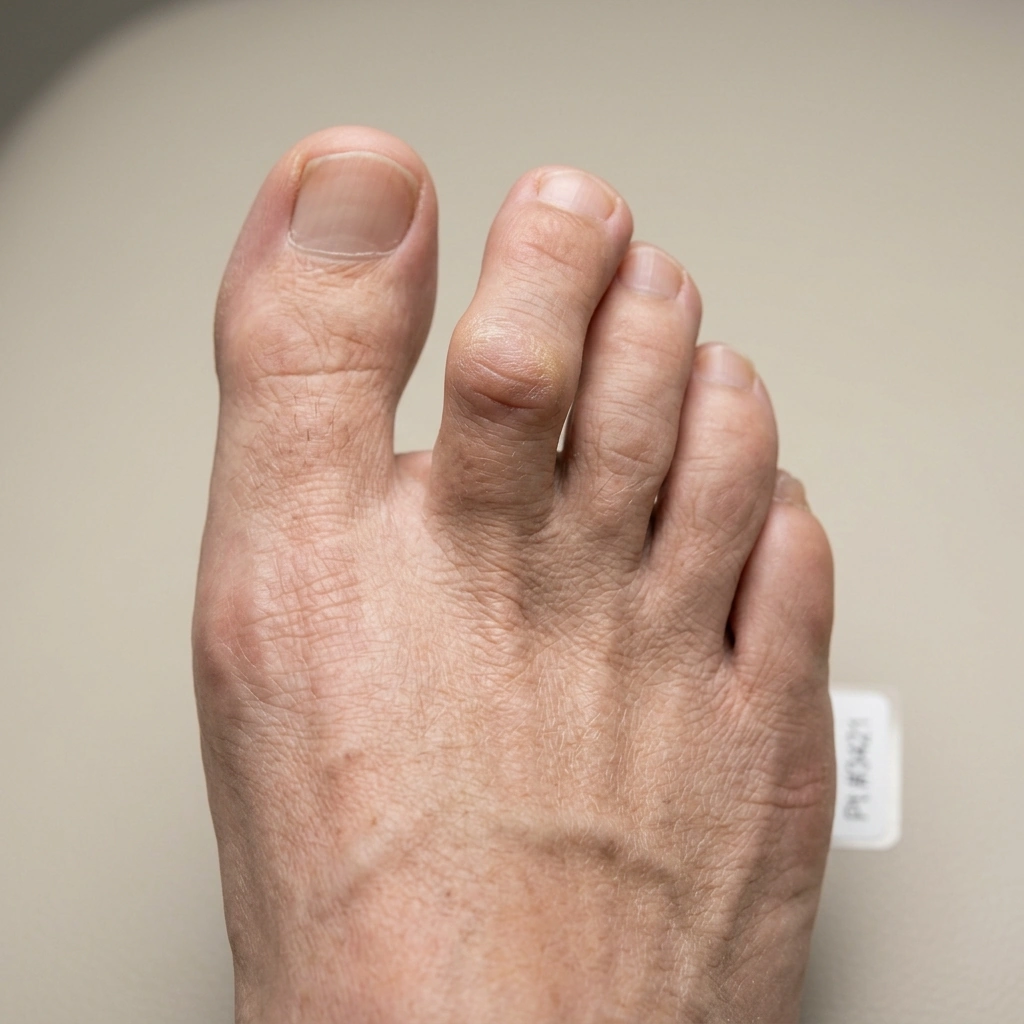
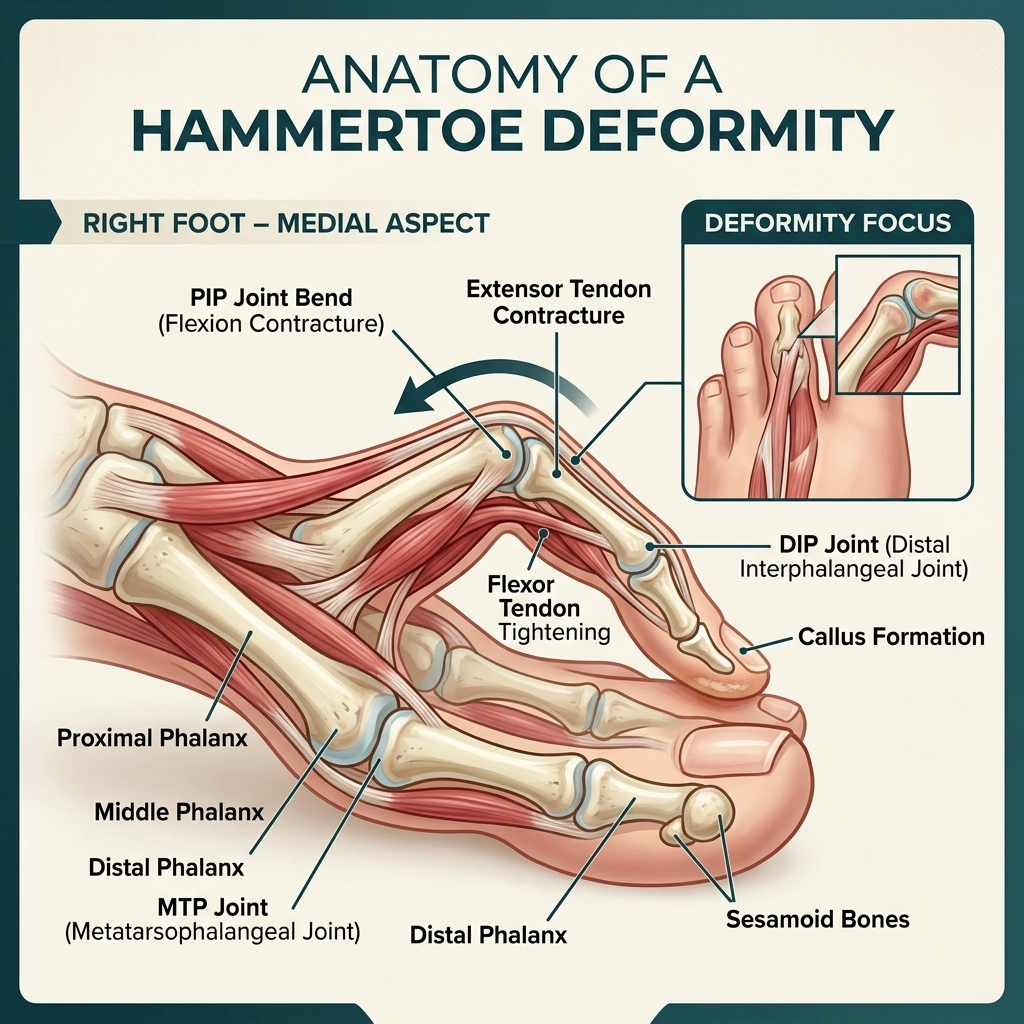
A hammertoe is a contracture deformity of the smaller toes (second, third, or fourth), occurring when muscle imbalances cause tendons and joints to pull the toe upward. This constant friction against footwear leads to painful corns and calluses.
Biomechanical conditions like flat feet or high arches frequently cause these contractures. Managing arch alignment with custom orthotics helps reduce secondary strain on digital joints.
Types of Toe Contractures
Hammertoe
An abnormal bend at the middle joint of a toe (PIP joint), causing the toe to buckle downward. It most commonly affects the second toe.
Mallet Toe
A contracture that occurs at the joint nearest the toenail (DIP joint). Constant downward curling creates painful calluses at the tip of the toe.
Claw Toe
An upward bend at the joint where the toe meets the foot, combined with a downward bend at both the middle and end toe joints, clawing into the sole.
Non-Surgical Relief & Prevention
- Sensible Footwear: Wear shoes with a wider, deeper toe box to reduce rubbing.
- Padding & Pumice: Use silicone/moleskin pads and gently file corns with pumice.
- Toe Exercises: Extend, curl, and splay toes individually to keep tendons supple.
- Permanent Fix: Surgery with Dr. Neha Delvadia is the only permanent solution to straighten rigid toes.
Diabetic Warning
Corns and calluses on rigid hammertoes represent a serious clinical risk for patients with diabetes. Continuous shoe friction over the bent joint causes calluses that can break down into deep ulcers. Learn about our diabetic foot care services.
Why Choose Hammertoe Correction?
Eliminate Friction & Pain
Realigns buckled digital joints so the top of the toe stops painful rubbing against footwear.
Prevent Calluses & Ulcers
Stops the constant pressure that forms thick, painful corns and diabetic skin break-downs.
Restore Natural Gait
Re-establishes normal push-off power and prevents compensatory ankle, hip, or back pain.
Minimal Recovery Interruption
Modern surgical procedures allow early weight-bearing in a specialized protective boot/shoe.
Permanent Joint Correction
Surgery releases the contracted tendons and realigns the bone structures permanently.
Standard Footwear Comfort
Enables you to wear normal shoes comfortably without needing custom extra-wide sizes.
What to Expect During Your Treatment
Realigning contracted toe joints is an outpatient process combining thorough diagnostics and advanced surgical techniques.
Comprehensive Evaluation
Dr. Delvadia examines the flexibility of the joint and conducts in-office digital X-rays to assess bone structures.
Personalized Treatment Plan
Determine if custom orthotics and conservative padding will suffice or if realignment surgery is recommended.
Precise Joint Realignment
For rigid toes, a quick outpatient procedure releases tight tendons and realigns joints using tiny internal implants.
Active Recovery & Transition
Walk in a protective surgical boot/shoe for 6 weeks, followed by a smooth transition back to comfortable athletic shoes.