
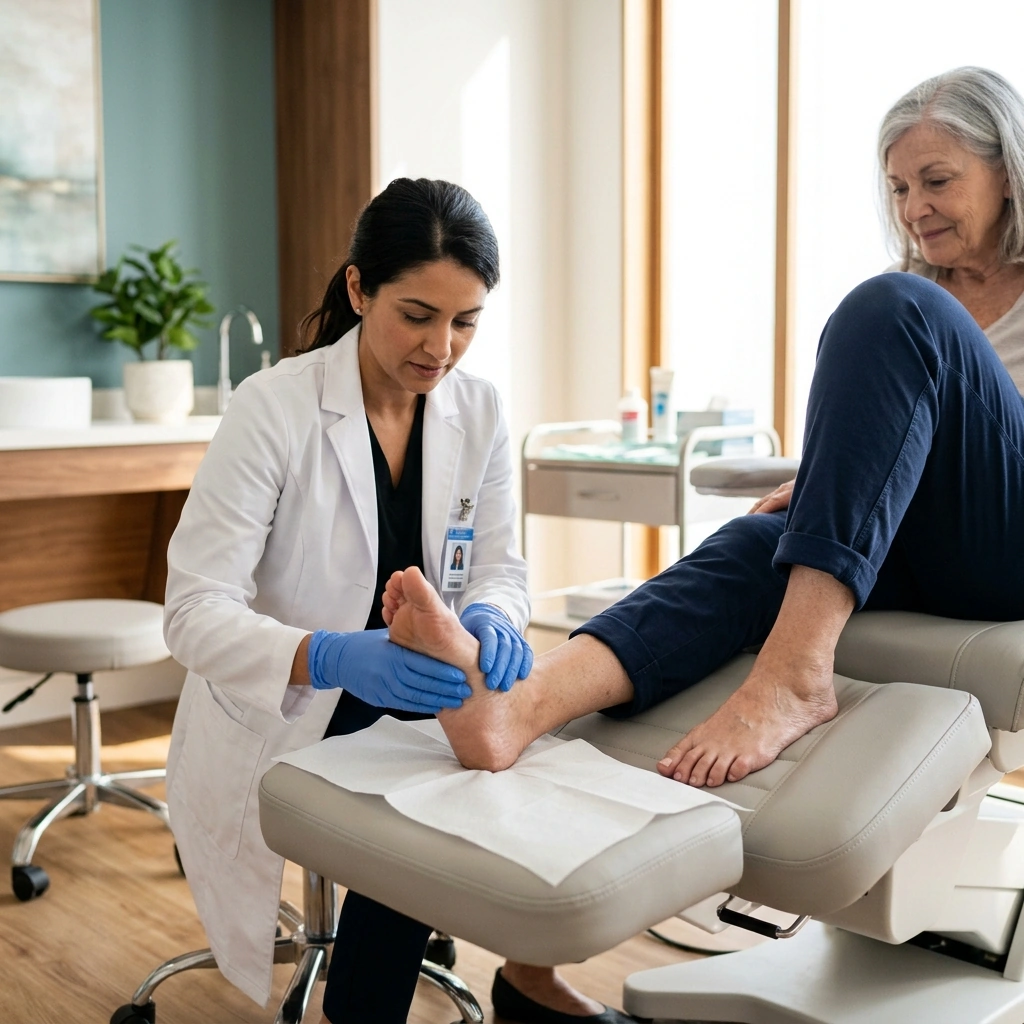
The best diabetic foot care practices recommended by podiatrists in Georgia include daily visual mirror inspections, gentle skin moisturization (excluding toe spaces), protective indoor/outdoor footwear, straight-across nail trimming, and annual podiatric nerve/vascular checks. Because peripheral neuropathy reduces pain sensation, early detection prevents minor skin breaks from progressing into deep ulcers. Dr. Neha Delvadia, leading podiatrist in Marietta at Podiatry Group of Georgia, provides comprehensive diabetic foot examinations and therapeutic orthotics to preserve long-term mobility.
Living with diabetes requires careful, proactive management of your overall health, and your feet are no exception. Over time, high blood sugar levels can damage blood vessels and nerves in your extremities, a condition known as peripheral neuropathy. Neuropathy reduces your ability to feel pain, temperature, or injuries on the soles of your feet.
If you are asking “What are the best diabetic foot care practices recommended by podiatrists in Georgia?”, the key is consistency and professional clinical guidance. When sensation is reduced, minor cuts, blisters, or dry cracks can easily develop into deep, limb-threatening infections or ulcers. To safeguard your mobility and prevent serious diabetic complications, here are five essential daily tips recommended by top foot specialists:
1. Inspect Your Feet Daily
Perform a thorough foot check every single evening. Look for red spots, swelling, blisters, cuts, or ingrown toenails. If you have difficulty bending or reaching your feet, place a mirror on the floor to inspect the soles, or ask a family member for assistance. Catching issues early is the key to preventing diabetic foot ulcers.
2. Keep Your Feet Clean and Dry
Wash your feet daily in lukewarm water. Be sure to check the water temperature with your elbow or a thermometer to prevent burns if your sensory perception is reduced. Use a mild soap, and dry your feet gently and thoroughly—especially between the toes—to prevent fungal buildup (like athlete's foot).
3. Moisturize, But Avoid Interdigital Spaces
Diabetic skin often becomes dry and prone to cracking due to autonomic neuropathy. Apply a thin layer of moisturizing lotion to the tops and bottoms of your feet daily. However, never apply lotion in between your toes. Excess moisture in these dark, confined spaces creates an ideal environment for bacterial and fungal infections.
4. Never Go Barefoot
Always wear shoes and socks, even inside the house. Barefoot walking significantly increases the risk of stepping on sharp particles, splinters, or furniture corners. Ensure your socks are clean, dry, and seamless if possible to avoid localized friction. For added structural offloading, consider accommodative custom orthotics.
5. Trim Nails Straight Across
Trim your toenails straight across and gently smooth the edges with an emery board. Avoid clipping the corners down or digging into the nail folds, as this easily causes painful ingrown toenails. If your nails are thick, curved, or difficult to manage, seek professional clinical nail care or laser toenail fungus treatment at our Marietta office.
When to Consult Dr. Delvadia at Podiatry Group of Georgia
Routine professional diabetic foot examinations are recommended at least once a year, or immediately if you detect signs of an active wound, deep callus, change in sensation, or slow-healing sore. At Podiatry Group of Georgia, we offer complete peripheral vascular examinations, sensory checks, specialized wound care dressings, and therapeutic offloading to prevent complications.