
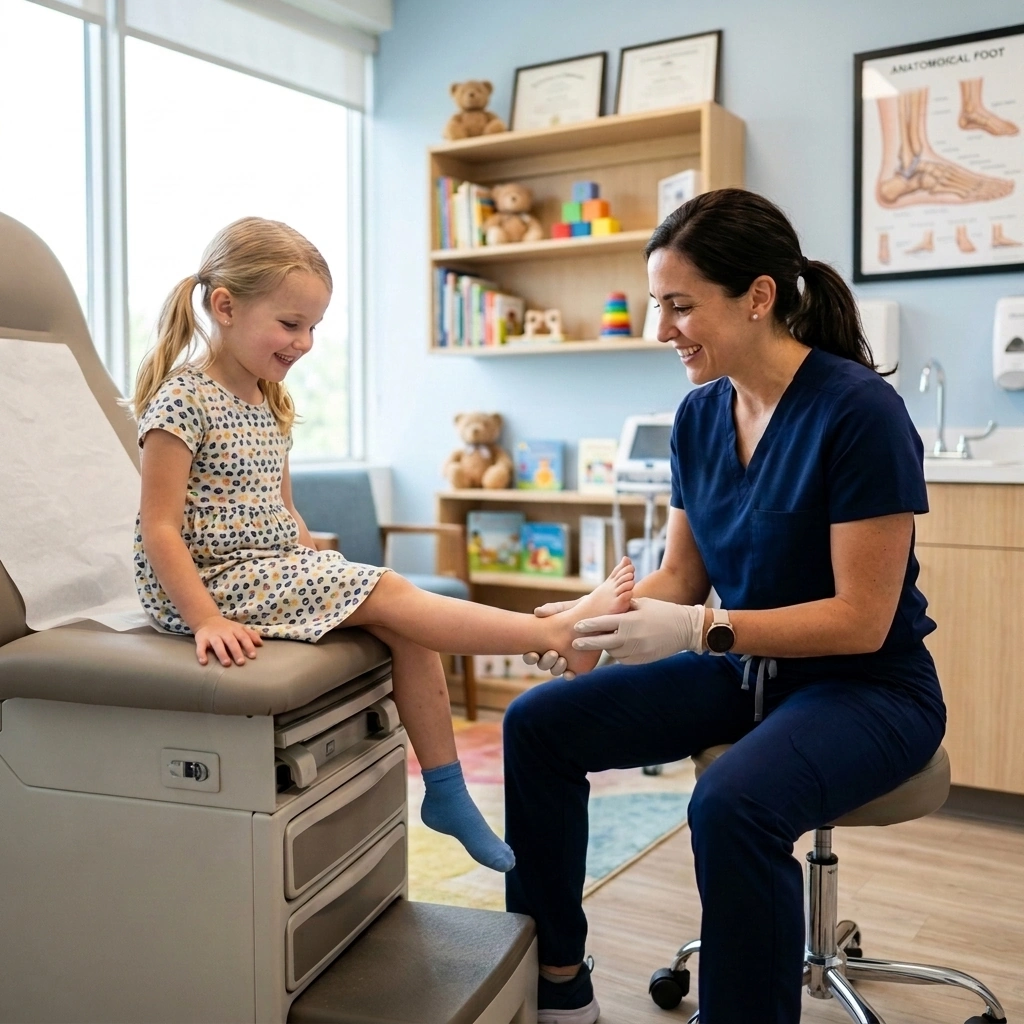
Children's feet undergo rapid growth from toddlerhood through adolescence, making them susceptible to structural and skin conditions like flexible flat feet, Sever's growth plate heel pain, plantar warts, and ingrown toenails. According to Dr. Delvadia, a specialized podiatrist in Marietta at Podiatry Group of Georgia, foot pain in active children should never be brushed off as simple "growing pains." Early clinical intervention prevents compensatory gait abnormalities and supports long-term joint health.
As parents, we meticulously track our children's developmental milestones, schedule regular dental checkups, and ensure they visit the pediatrician for annual physicals. Yet, one of the most critical aspects of their physical growth is often overlooked: their feet.
From the first wobbly toddler steps to the demanding physical impact of high school athletics, a child's feet go through rapid structural changes. Developing feet are highly flexible and adaptable, which makes them vulnerable to injury and misalignment. Recognizing foot concerns early and addressing them with Dr. Delvadia at Podiatry Group of Georgia ensures that your children build a healthy foundation for a lifetime of movement.
When Should Parents Worry About Pediatric Flat Feet?
It is incredibly common for toddlers and young children to appear to have flat feet. During infancy and toddlerhood, the foot's longitudinal arch is naturally masked by a thick layer of baby fat, and the bones and ligaments are still developing. In most cases, a functional arch begins to form naturally between the ages of 3 and 6.
However, you should seek professional consultation with a podiatrist in Marietta if your child:
- Complains of fatigue or pain in their feet, ankles, shins, or knees during or after walking.
- Withdraws from sports or active play because their legs or feet "tired out" quickly.
- Exhibits an awkward gait, walks on their tiptoes, or has shoes that wear out unevenly or collapse inward.
If pediatric flatfoot is symptomatic, conservative intervention using custom-molded prescription orthotic inserts at Podiatry Group of Georgia can help realign the bones of the foot, distribute weight evenly, and prevent compensatory strain on the knees and lower back.
How Do Children Get Plantar Warts and How Are They Treated?
Plantar warts are caused by the Human Papillomavirus (HPV) entering the body through tiny cuts or weak spots in the skin on the bottom of the feet. Children and teenagers are particularly susceptible because their immune systems are still developing defenses against the virus, and they frequently gather in high-exposure areas.
Marietta community pools, public school locker rooms, martial arts studios, and gymnasium floors are common transmission sites. Plantar warts can grow inward due to walking pressure, making them painful and feel like a small stone in the shoe.
Our clinical team at Podiatry Group of Georgia provides gentle, targeted treatments for plantar warts that avoid the damage to surrounding healthy skin often associated with harsh store-bought acid kits.
What Causes Growth Plate Heel Pain (Sever's Disease) in Young Athletes?
If your active child between the ages of 8 and 14 complains of a deep, aching pain in their heel, the most likely culprit is calcaneal apophysitis, commonly known as Sever's disease.
Sever's disease is not actually a disease, but rather a temporary overuse injury caused by the repetitive pulling of the Achilles tendon on the heel's growth plate. During puberty, bones often grow faster than the surrounding muscles and tendons, leaving the calf muscles tight and putting immense tension on the growth plate during sports like soccer, basketball, or track.
Active clinical management by Dr. Delvadia—including targeted calf stretching, ice therapy, temporary heel lifts, or custom biomechanical support—is highly effective. Recognizing these symptoms early keeps the condition from worsening, allowing the growth plate to heal properly. Read our guide on heel pain relief to learn more about how we diagnose and treat this condition.
Pediatric Foot Conditions Quick Reference Guide for Parents
| Condition | Typical Age Group | Key Symptoms | Clinical Care (Podiatry Group of Georgia) |
|---|---|---|---|
| Pediatric Flat Feet | 3 to 10 years | Arch collapse, leg fatigue, uneven shoe wear | Custom 3D orthotic inserts & gait realignment |
| Sever's Disease | 8 to 14 years | Heel pain after sports, limping, Achilles tension | Growth plate offloading & physical therapy |
| Plantar Warts | 5 to 17 years | Painful bump on heel/sole with tiny black specks | Gentle clinical topical & laser therapy |
| Ingrown Toenails | 10 to 18 years | Redness, swelling, & tenderness along toe border | Painless in-office nail border release |
Why Are Teenagers Most Susceptible to Ingrown Toenails?
We see a significant spike in painful ingrown toenails among middle and high school students. There are two primary reasons for this:
Rapid Foot Growth & Tight Footwear:Teenagers' feet can grow multiple sizes in a single year. Continuing to wear tight athletic cleats or running shoes pinches the toes, forcing the edge of the toenail into the surrounding skin.
Improper Trimming:Teenagers frequently trim their own nails, often rounding the edges or peeling off hangnails. This leaves a sharp corner or "spike" of nail that grows directly into the skin as it pushes forward.
If the toe becomes red, swollen, or starts draining fluid, a localized infection has likely set in. Dr. Delvadia offers a quick, painless in-office procedure to relieve the pressure and permanently prevent the nail border from re-growing into the skin.
How Are Youth Sports Injuries Managed by a Pediatric Podiatrist?
Sports play a vital role in keeping kids active and teaching teamwork, but sports-related foot and ankle injuries are very common. Ankle sprains, stress fractures of the metatarsals, and tendonitis require prompt diagnosis and proper rehabilitation. Leaving a juvenile ankle sprain untreated increases the risk of chronic ankle instability in adulthood.
At Podiatry Group of Georgia, we are deeply committed to supporting youth sports safety and athletic excellence in our Marietta and East Cobb communities through our community giving back initiative. We are proud official sponsors of local student programs at:
- Murdock Elementary School (MESF) – Nurturing healthy movement habits in our youngest local children.
- Tritt Elementary Partners in Education – Supporting student wellness and active classroom development.
- Pope High School Football – Providing sports medicine consultation and preventative support to help the Greyhounds perform at their peak safely.
- Sprayberry Football – Keeping Yellow Jackets athletes healthy with proper foot and ankle biomechanics.
- Lassiter PTSA – Partnering with school community programs to promote youth health and safety.
In addition to our sponsorships, our clinic specializes in pediatric sports injury treatment for student athletes playing competitive sports across the East Cobb and Marietta school districts, including students from Walton, Sprayberry, and Lassiter high schools.