Bunion Specialist & Surgery
Permanently realign your big toe joint, alleviate chronic pain, and restore your foot's natural mobility. Specialized surgical and conservative corrections led by Dr. Neha Delvadia, DPM at our Marietta office.
Quick Summary: Bunion Causes & Surgical Correction
A bunion (hallux valgus) is a progressive bony deformity at the base of the big toe caused by inherited foot mechanics, flat feet, or biomechanical instability — aggravated by narrow or high-heeled footwear. Because bunions are a structural bone misalignment, they cannot be reversed without surgery. Conservative care such as custom orthotics, wider shoes, and padding manages pain and slows progression. When pain persists, Dr. Neha Delvadia, DPM performs outpatient osteotomy realignment or joint fusion (arthrodesis) at our Marietta office, with most patients back in athletic shoes within 6–8 weeks.
Understanding Bunion Deformities
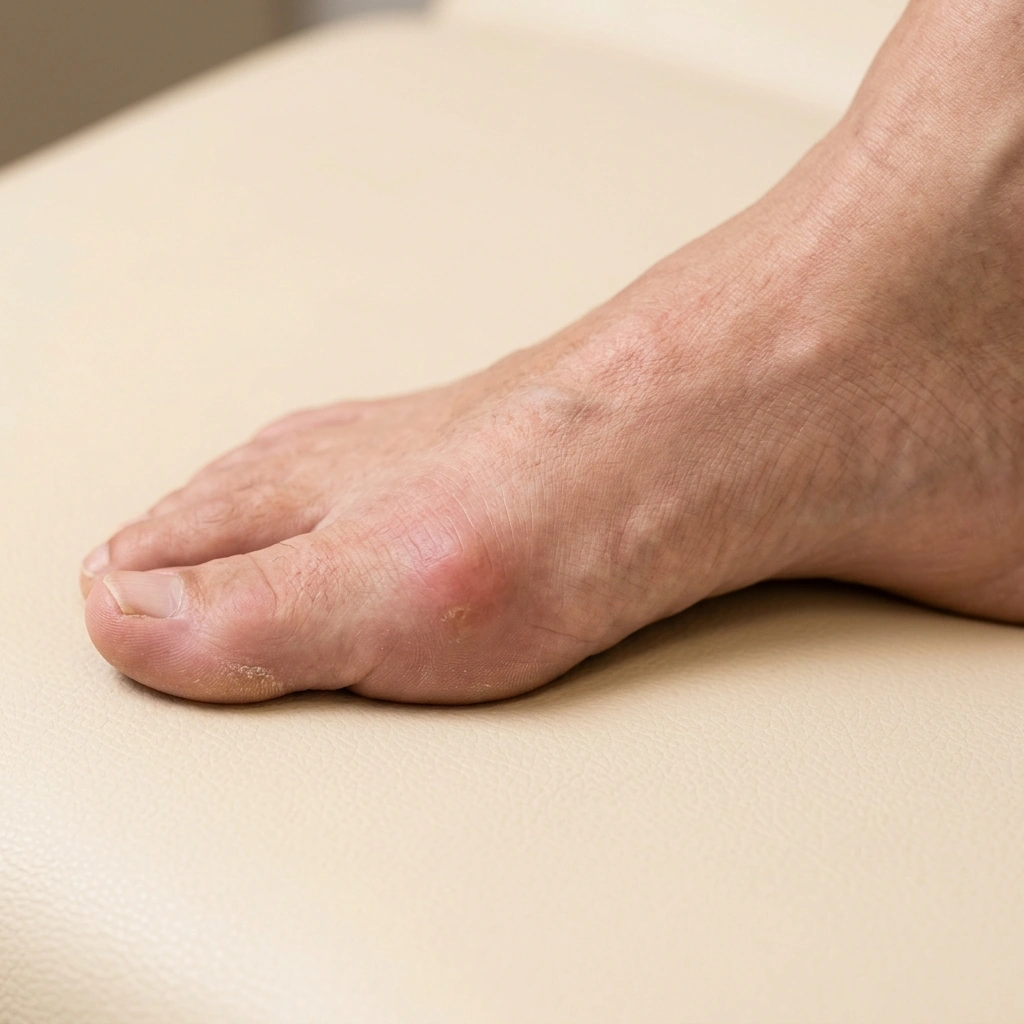
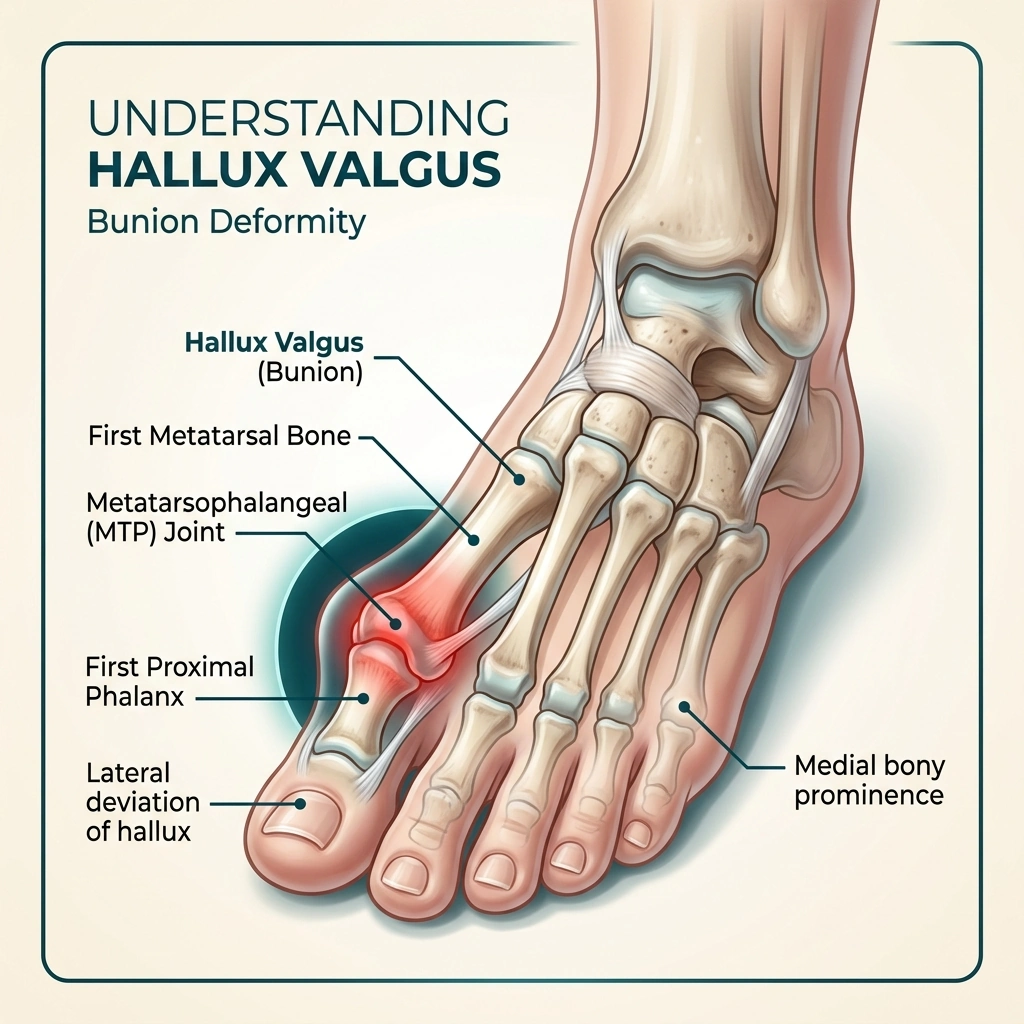
A bunion (hallux valgus) is a progressive bony deformity that forms at the metatarsophalangeal (MTP) joint at the base of the big toe. Bunions develop when structural instability causes the big toe to lean inward toward the second toe, forcing the bone joint outward and creating a painful bony bump.
While genetic foot structure is the primary cause, narrow, tight, or high-heeled footwear can accelerate bunion progression. Because this is a structural bone deviation, a bunion will not improve, straighten, or resolve without surgical correction. Non-surgical options like custom orthotics help slow down progression and manage mechanical stress.
Surgical intervention with Dr. Neha Delvadia is recommended based on your level of pain and physical limitation, rather than cosmetic appearance alone.
Is Bunion Surgery Right for You?
Persistent Pain
Chronic pain that limits daily walking, exercise, or standing, even when wearing wide or sensible footwear.
Joint Stiffness & Deviation
Stiffness or inability to flex and bend the big toe joint, leading to an altered gait or compensation pain in other joints.
Crossing or Crowded Toes
When the big toe leans so far inward that it crowds, overlaps, or pushes against the second toe, causing secondary deformities.
Conservative Care Failure
No lasting pain relief from custom orthotics, wider shoes, toe separators, protective padding, or anti-inflammatory therapies.
Modern Bunion Correction
Our office provides advanced surgical options custom-tailored to your lifestyle, bone structure, and severity of the joint deviation.
Osteotomy & Realignment
For mild to moderate bunions, a precise bone cut (osteotomy) is made to shift the joint back into place. Internal fixation with tiny screws keeps the bone stable, allowing for a swift and comfortable recovery.
Joint Fusion (Arthrodesis)
Ideal for severe deformities or cases complicated by advanced arthritis. Fusing the joint stabilizes the skeletal column, permanently resolving the deformity and alleviating chronic arthritic pain.
What to Expect During Your Treatment
Realigning bone structures requires structured diagnostic accuracy and custom recovery protocols.
Biomechanical Evaluation
Dr. Delvadia conducts a physical exam to evaluate joint mobility, gait patterns, and clinical stability.
Digital X-Ray Assessment
High-resolution digital X-rays measure the precise angle of bone deviation to plan your correction.
Surgical Realignment
Quick outpatient procedure shifts the joint back into position, securing it with internal fixation.
Active Recovery Support
Recover in a walking boot, transitioning to regular comfortable athletic shoes in 6 to 8 weeks.