
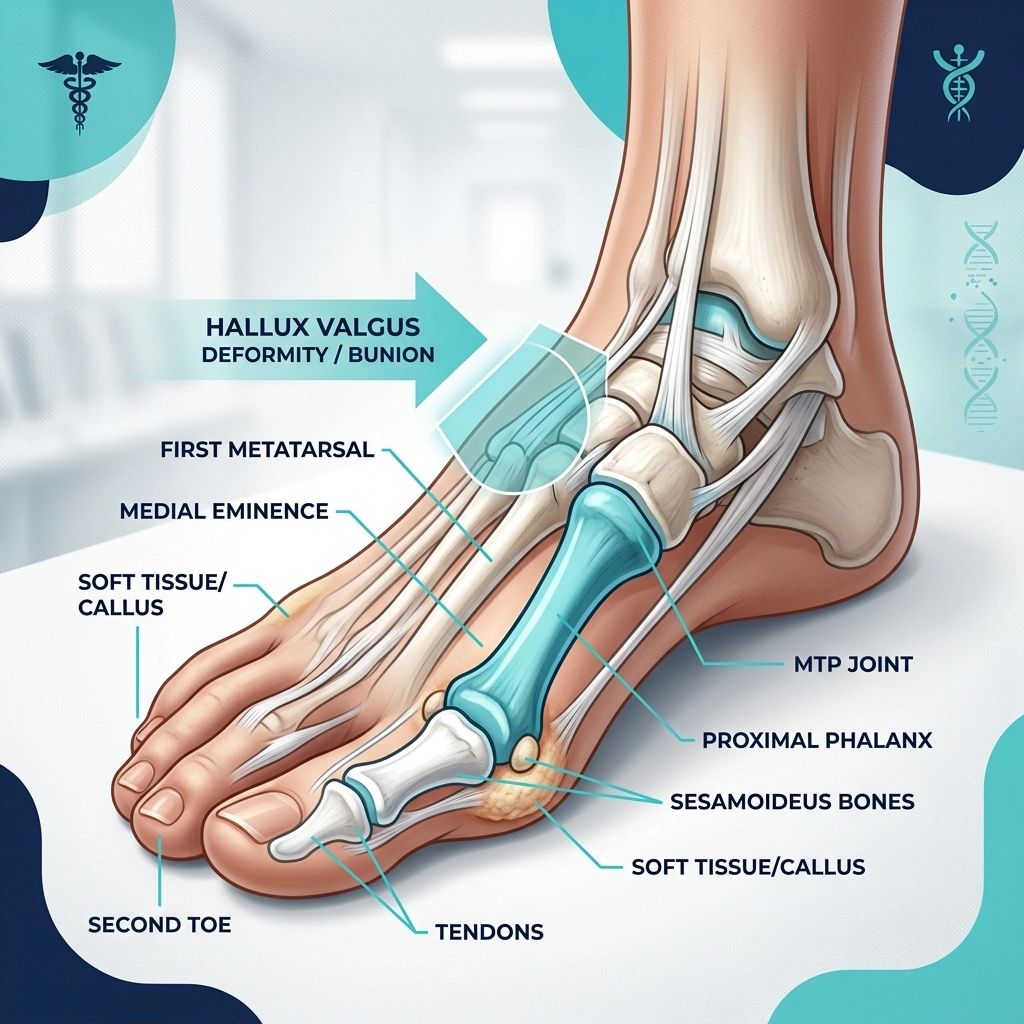
A bunion (Hallux Valgus) is a progressive bony deformity caused by a misalignment of the first metatarsal bone, forcing the big toe to lean inward toward the smaller toes. Primary causes include inherited foot mechanics, hypermobile joints, and flat feet, which are aggravated by restrictive footwear. Non-surgical management at Podiatry Group of Georgia includes custom prescription orthotics to halt progression, while persistent severe pain can be corrected through advanced surgical bunionectomy by Dr. Delvadia in Marietta.
Disorders or complications with the feet can be incredibly painful and debilitating. Unfortunately, almost three-quarters of Americans will suffer from some kind of foot problem within their lifetime. Bunions, one of the most common deformities, frequently run in families and can progressively worsen over time if left untreated.
Our feet carry us from here to there every single day. Yet, many patients do not think much about their foot health until they start experiencing pain.
What is a Bunion (Hallux Valgus)?
According to medical literature and clinical definitions, a bunion (hallux valgus) is an unnatural bony bump that forms at the base joint of the big toe, where it connects to the foot. This structural shift causes the big toe to deviate inward towards the other toes.
This inward lean pushes the first metatarsal bone outward. As the bone protrudes, it rubs against shoes, resulting in localized inflammation, redness, and joint pain. Sometimes, a similar deviation occurs at the base of the little toe (fifth metatarsal), which is clinically referred to as a bunionette or tailor's bunion.
Why and How Do Bunions Develop?
Bunions develop gradually over years. While many people believe tight shoes are the sole culprit, the primary causes are actually rooted in genetics and anatomy:
- Inherited Foot Structure: Flat feet, low arches, and hypermobile joints naturally predispose patients to joint instability, leading to bunion development.
- Improper Footwear: Wearing shoes that are too narrow, pointed, or restrictive (such as high heels) squeezes the toes together, accelerating deformity progression.
- Inflammatory Conditions: Diseases like rheumatoid arthritis increase joint damage susceptibility, contributing to skeletal shifts.
When to Seek Medical Treatment for Bunions
Foot pain is not a normal part of aging or active living. If you notice a visible bump developing on the side of your big toe joint, or experience swelling and pain that limits your walking distance, it is time to schedule a podiatric evaluation.
At Podiatry Group of Georgia, we prioritize conservative, non-invasive therapies first—including custom-molded orthotic inserts to redistribute weight away from the big toe joint, custom padding, and biomechanical offloading. If conservative methods fail to provide relief and pain becomes severe, surgical options like a bunionectomy may be recommended. Dr. Neha Delvadia is a residency-trained surgeon with years of experience performing advanced reconstructive bunion surgery in Marietta.