
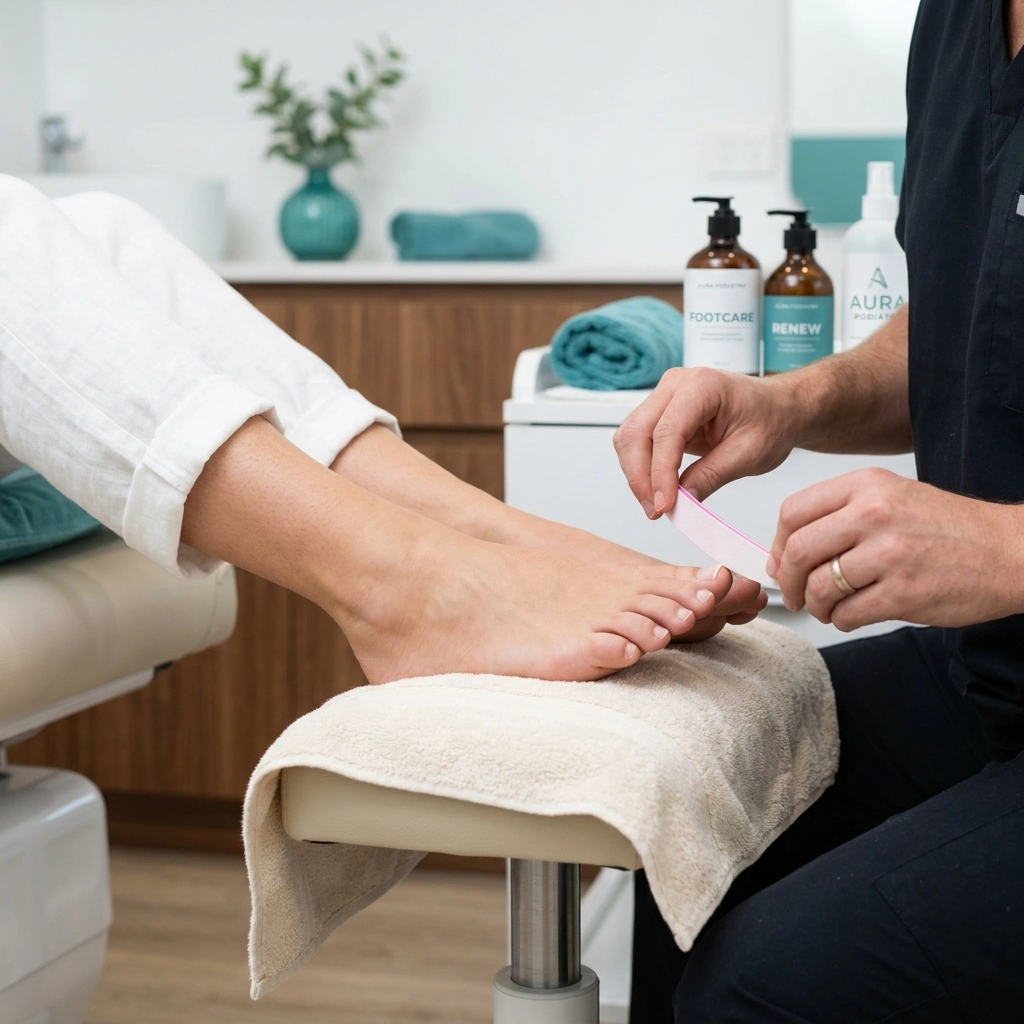
Ideal toenail length reaches flush with the edge of your toe tip. Trimming toenails too short exposes sensitive nail bed tissue to fungal infection and skin embedding, while leaving them long causes shoe pressure micro-trauma. Dr. Delvadia, podiatrist in Marietta at Podiatry Group of Georgia, recommends trimming toenails straight across (never rounding corners) using dedicated toenail clippers and filing rough edges with an emery board to prevent ingrown toenails.
Maintaining proper toenail length is one of the easiest yet most overlooked aspects of foot hygiene. Many patients either trim their nails too short or let them grow too long, which can lead to uncomfortable complications like ingrown toenails, fungal infections, or structural damage.
Learning how to manage and cut your toenails correctly is essential to protecting your toes from everyday wear and tear. Here are the clinical guidelines and best practices for proper toenail length.
Determining the Ideal Toenail Length
When deciding how short to cut your nails, consider the style of shoes you wear most often and the activities you participate in:
- For Runners and Athletes: High-impact activity puts additional pressure on the tips of your toes. Keep your nails short enough so they don't continuously strike the front of your shoes, which can cause micro-trauma, subungual hematomas (black toe), or nail loss. Learn about black toenail treatment.
- For Open-Toe Shoe & Sandal Wearers: Avoid cutting toenails too short. Exposed nail beds are more vulnerable to micro-organisms and environmental bacteria, which can enter through tiny cracks and lead to stubborn toenail fungus.
As a clinical best practice, trim your toenails so the edge reaches exactly the tip of your toe.
The Proper Way to Care and Trim Toenails
Trimming your toenails correctly is crucial to prevent painful ingrown toenails, which can become easily infected. Follow these three steps:
- Wash and Dry First: Clean, dry nails are softer and less brittle, making them much easier to cut cleanly without splintering.
- Use the Right Tools: Always use dedicated, clean, and sanitized toenail clippers. Avoid using fingernail clippers, which are curved and designed for thinner nails.
- Trim Straight Across: This step is critical. Never round the corners or cut the nail at an angle. Doing so encourages the nail borders to grow directly into the surrounding skin fold as the nail grows forward.
After clipping, use an emery board to file down any remaining sharp or jagged edges. This prevents the nail from catching on socks or sheets, which could cause a painful snag or tear.
When to Seek Professional Podiatric Care
Your toenails act as a protective barrier for your toes. Following these proper foot care tips will help keep them healthy and prevent painful complications. If you develop an ingrown toenail, local swelling, or suspect toenail fungus, seek professional podiatric care.
At Podiatry Group of Georgia, Dr. Neha Delvadia can safely resolve severe ingrown toenails using quick, in-office procedures and treat nail fungus using advanced FDA-cleared laser toenail therapies or medical pedicures at our medical spa.