
Black Toenail Specialist & Subungual Hematoma Relief
Relieve throbbing pressure and painful discoloration under your toenail. Led by Dr. Neha Delvadia, DPM, we provide immediate, sterile in-office decompression (trephination) at our Marietta office.
Quick Summary: Black Toenail Causes & Treatment
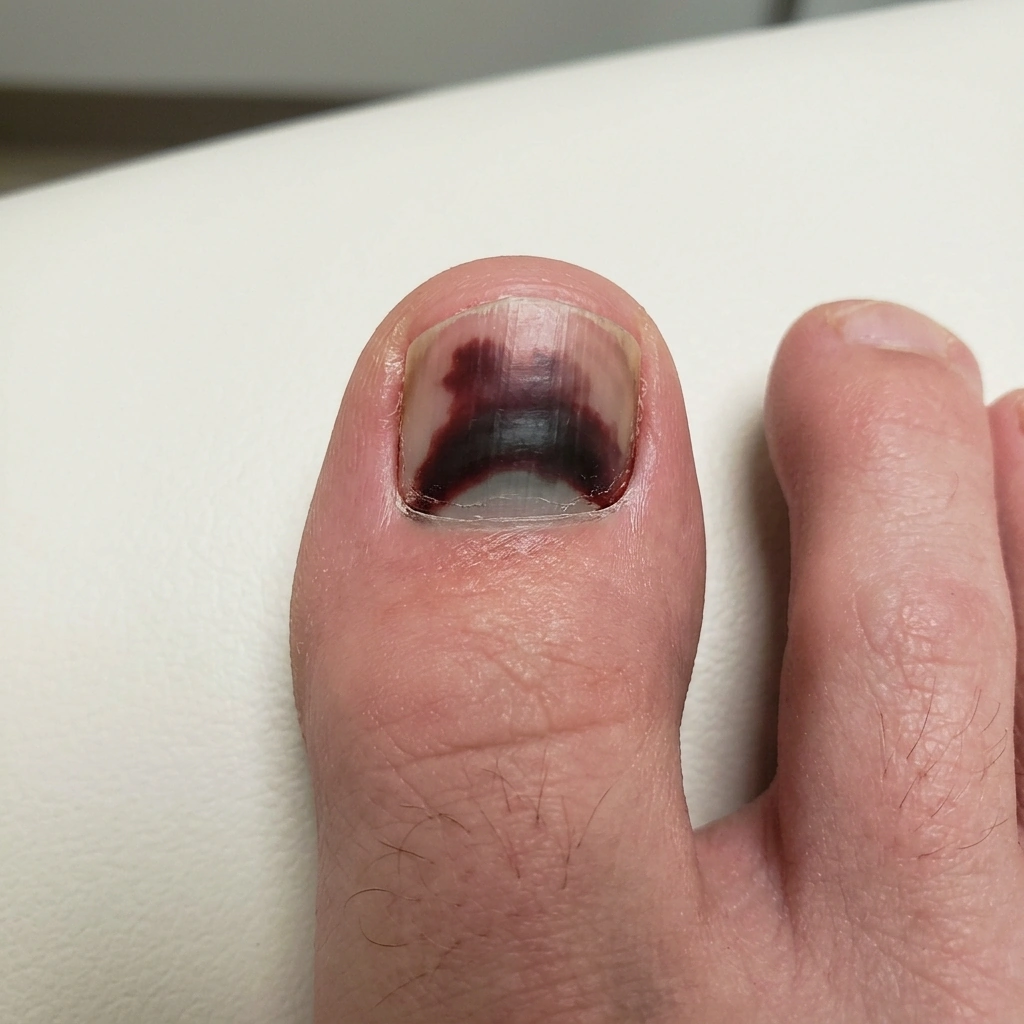
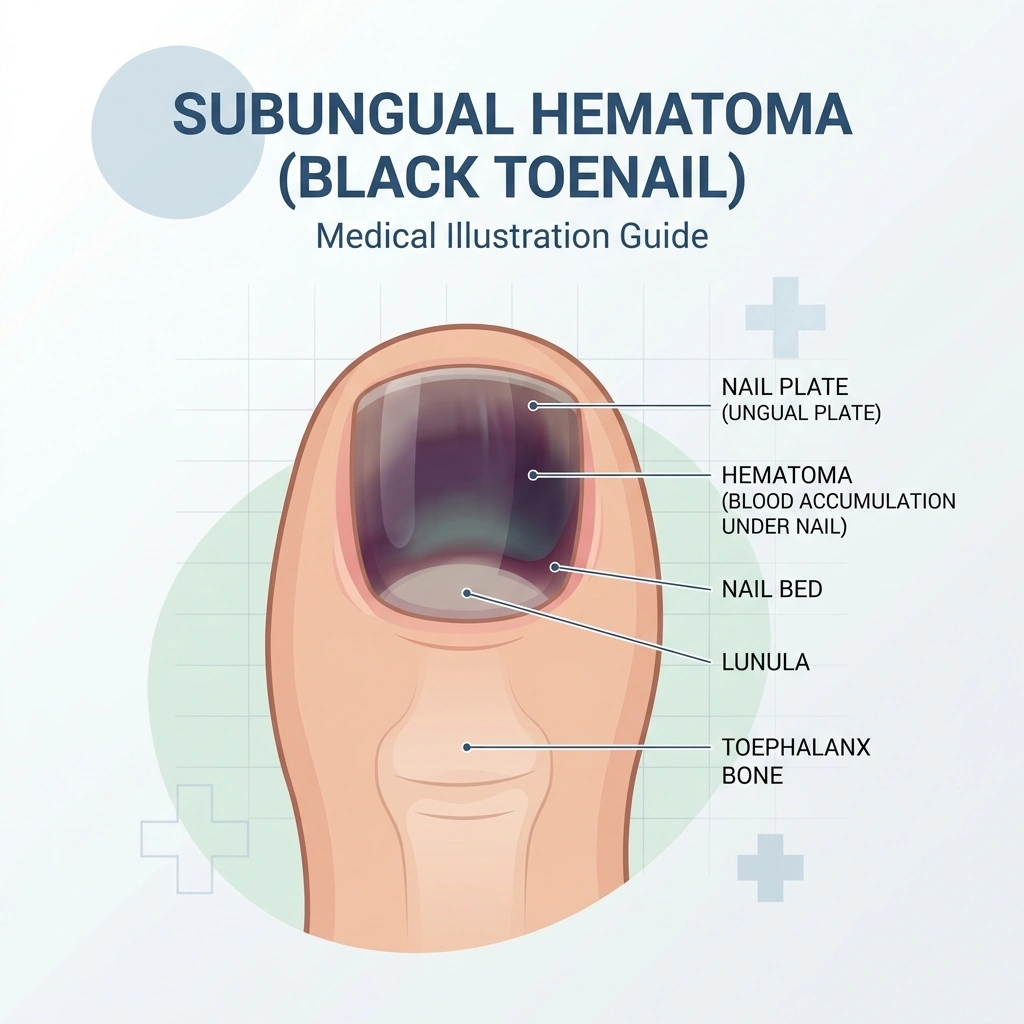
A black toenail (subungual hematoma) is a collection of blood trapped beneath the nail plate, caused by acute trauma (dropping an object on your toe) or repetitive micro-trauma common in runners, hikers, and athletes (runner's toe). Throbbing pressure and dark discoloration are hallmark symptoms. At our Marietta office, Dr. Neha Delvadia, DPM performs painless, sterile nail trephination to drain the blood and relieve pressure instantly. Digital X-rays rule out underlying bone fractures, and any unexplained dark spots are evaluated to exclude rare subungual melanoma. Custom athletic orthotics and shoe-fitting guidance help prevent recurrence.
What causes a black toenail (subungual hematoma)?
A black toenail is typically a subungual hematoma, which is a collection of blood underneath the nail plate. This occurs when an injury damages the delicate blood vessels of the nail bed, causing blood to pool and become trapped.
There are two primary ways this happens: acute trauma (such as slamming a toe in a door or dropping a heavy object) and repetitive micro-trauma. Repetitive micro-trauma, often called "runner"s toe," is common in runners, hikers, and tennis players whose toes continuously rub or slam against the front of their footwear. Explore our sports medicine services.
If the blood covers a significant portion of the nail bed, or if the throbbing pressure is severe, prompt medical care with Dr. Neha Delvadia is essential. Draining the fluid under sterile conditions prevents serious bacterial infections and safeguards the nail bed. Custom athletic orthotics can also help prevent repetitive shoe impact.
Clinical Indicators of Subungual Hematoma
Identify the symptoms of blood pooling under the nail early to relieve pain and prevent long-term nail bed damage.
Nail Discoloration
Dark red, purple, maroon, or black pooling beneath the nail plate after injury or friction.
Throbbing Pressure
Intense, localized pulsing pain caused by blood trapped in a non-expanding space.
Nail Bed Tenderness
Extreme sensitivity to direct touch, walking, or wearing closed-toe shoes.
Nail Loosening
Gradual lifting or complete separation of the toenail (onycholysis) from the nail bed.
Localized Swelling
Inflammation and redness around the cuticle line and the surrounding toe skin.
Fungal Susceptibility
A damaged nail plate or lifted nail bed creates an entry point for secondary fungal infections.
Why Seek In-Office Clinical Treatment?
Immediate Pressure Relief
Painless clinical decompression (nail trephination) quickly drains trapped blood to resolve throbbing pressure.
Infection Prevention
Performed in a fully sterile clinical environment to protect the compromised nail bed from bacterial entry.
Comprehensive Diagnosis
We rule out underlying distal phalanx bone fractures or rare occurrences of subungual melanoma.
Nail Preservation Care
Early drainage helps reduce pressure-induced lifting, increasing the chance of saving the natural nail.
Recurrence Prevention
Biomechanical evaluation, custom orthotics, and shoe-fitting guidelines to protect runners and hikers.
Board Certified Standard
Evaluated and treated directly by a Board Certified Podiatrist utilizing advanced, sterile instruments.
What to Expect During the In-Office Procedure
The decompression procedure is quick, clean, and painless, taking place right in our comfortable podiatric treatment rooms.
Clinical & X-Ray Check
Dr. Delvadia evaluates the extent of the hematoma and performs digital imaging to rule out bone fractures.
Sterile Site Sanitization
The affected toe and surrounding skin are thoroughly cleaned using hospital-grade surgical prep solutions.
Painless Decompression
A sterile, temperature-controlled micro-cautery device creates a tiny, painless hole in the nail to drain blood.
Antiseptic Dressing
A soothing clinical antiseptic is applied, followed by a sterile, protective bandage to facilitate safe healing.