Pebble in Your Shoe? Morton's Neuroma Relief in Marietta, GA
Feeling a phantom pebble, marble, or bunched sock under your toes? Learn why changing shoes and resting fail, and how targeted non-surgical care resolves nerve compression.
Get targeted, lasting relief from burning ball-of-foot pain, numbness, and the sensation of stepping on a pebble. Led by Dr. Neha Delvadia, DPM, our dedicated foot and ankle practice provides in-office digital X-rays, custom orthotics, and non-surgical therapies at our Marietta & East Cobb office.
Morton's neuroma is a painful thickening and inflammation of the nerve sheath between the metatarsal heads of the foot (most commonly between the 3rd and 4th toes). Patients typically describe feeling like a pebble, rock, or folded sock is in their shoe accompanied by burning sensations and digital numbness. Over 85% of cases are successfully resolved without surgery using custom orthotics with metatarsal pads, wide toe-box footwear, and in-office anti-inflammatory injections administered by Dr. Neha Delvadia in Marietta, GA.
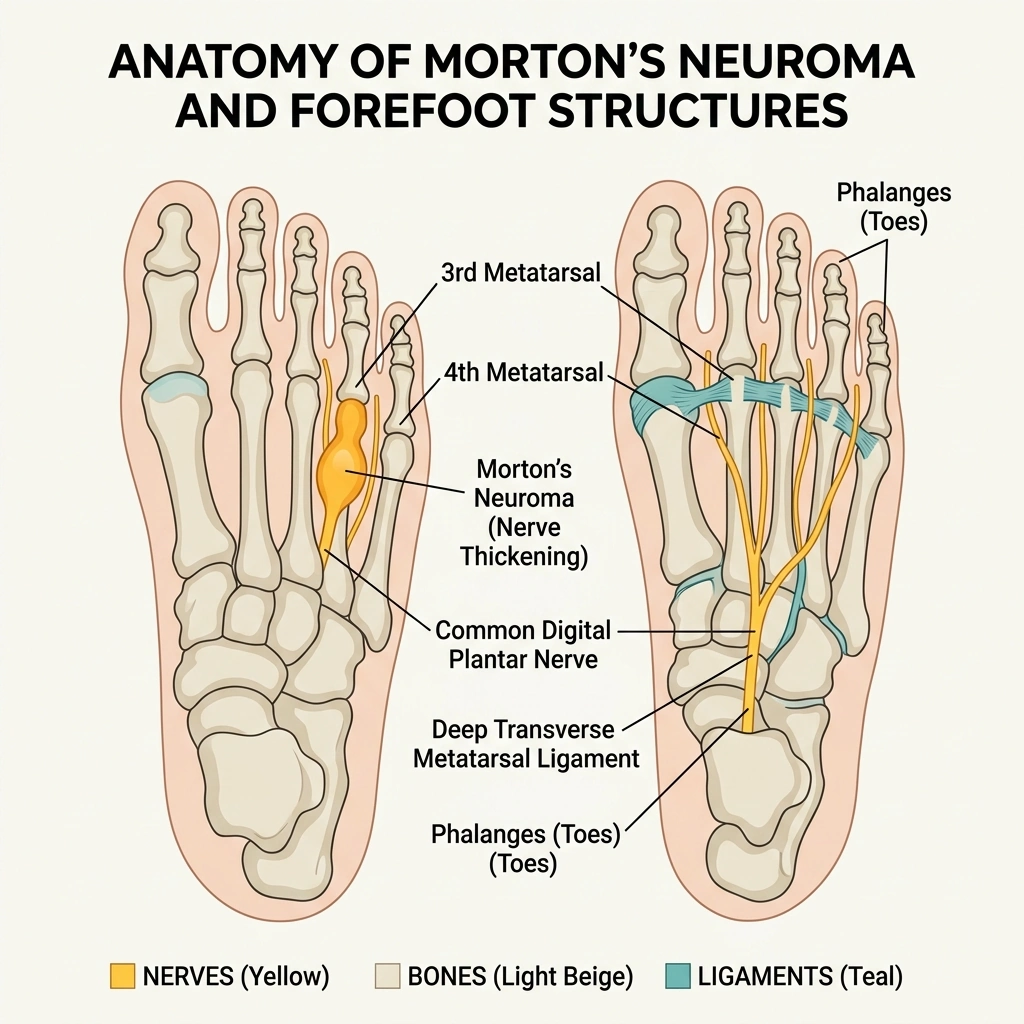
Morton's neuroma (intermetatarsal neuroma) is a benign, painful enlargement of the tissue surrounding one of the digital plantar nerves leading to the toes—most frequently occurring in the third intermetatarsal space between your third and fourth toes. When metatarsal bones compress or rub against the nerve, the protective nerve sheath progressively thickens (perineural fibrosis), causing sharp burning sensations, tingling, and numbness.
Morton's neuroma most commonly affects active adults and women aged 30 to 60, frequently triggered by tight, narrow-toed footwear, high heels, structural foot mechanics (such as flat feet or high arches), and repetitive high-impact athletic activities like running or tennis.
If you are searching for a ball of foot pain doctor near me in Marietta or East Cobb, Dr. Neha Delvadia, DPM provides expert clinical diagnosis. We isolate the precise root cause of your discomfort—whether it involves acute nerve compression, metatarsal stress fractures, or joint capsulitis—and construct a conservative treatment plan tailored to your lifestyle.
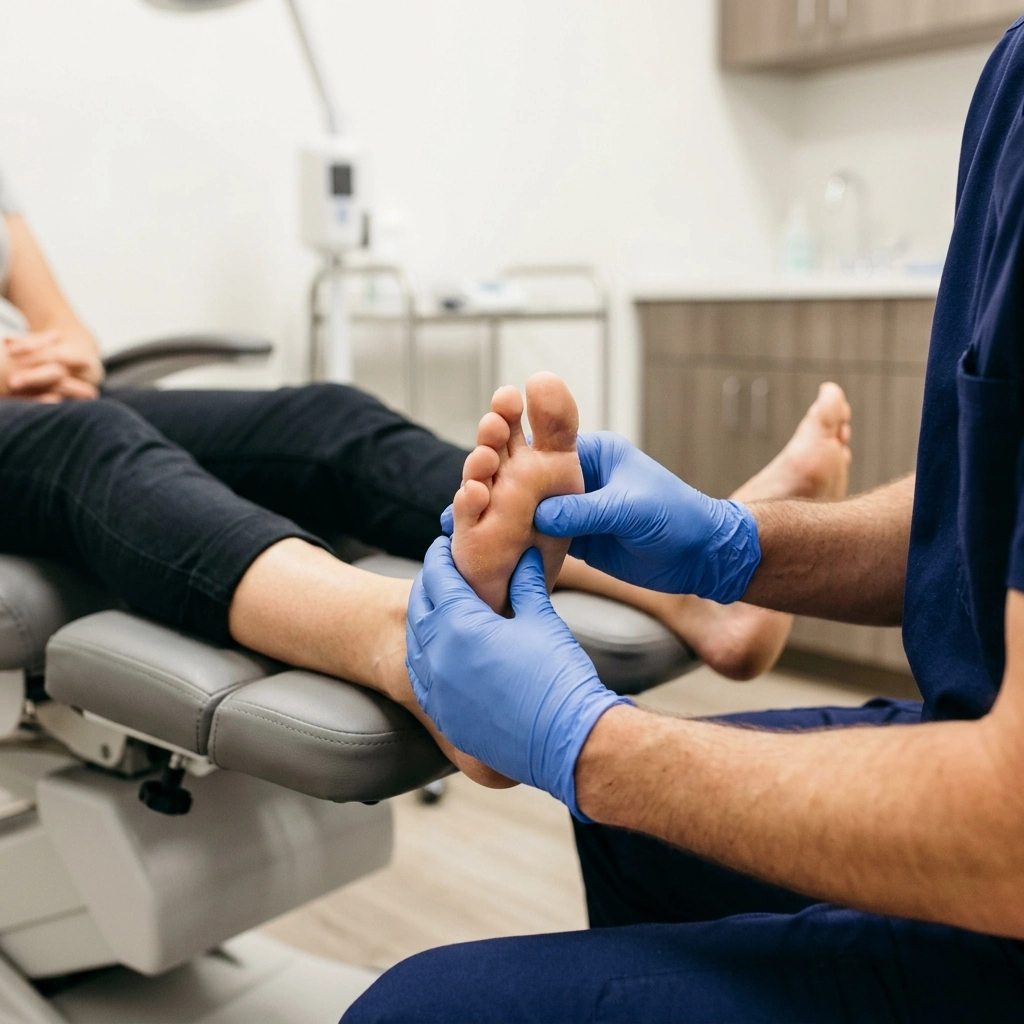
During your diagnostic visit, Dr. Neha Delvadia utilizes clinical Mulder's click testing and in-office high-resolution digital X-rays to evaluate bone alignment, space narrowing, and rule out underlying bone pathology. Our practice prioritizes non-surgical therapies first, utilizing custom-molded orthotics with metatarsal pads, targeted injection therapies, and footwear modifications. For severe, refractory cases that do not respond to conservative care after several months, Dr. Delvadia also provides expert surgical consultation for nerve decompression or excision.

Recognizing nerve compression symptoms early prevents temporary irritation from becoming chronic digital numbness.
A persistent, uncomfortable feeling that you are walking on a marble, folded sock, or pebble.
Intense, radiating heat or sharp burning under the ball of the foot, especially between the 3rd and 4th toes.
Pins-and-needles sensations or numbness that radiates outward into the affected middle toes.
Symptoms that rapidly worsen when wearing tight, narrow-toed footwear, high heels, or cycling cleats.
A sharp electrical shock or click sensation when the metatarsal bones are compressed side to side.
Pain that temporarily subsides when removing shoes, massaging the ball of the foot, or resting.
Immediate digital X-rays and clinical palpation to rule out metatarsal stress fractures, Freiberg's infraction, capsulitis, or joint arthritis.
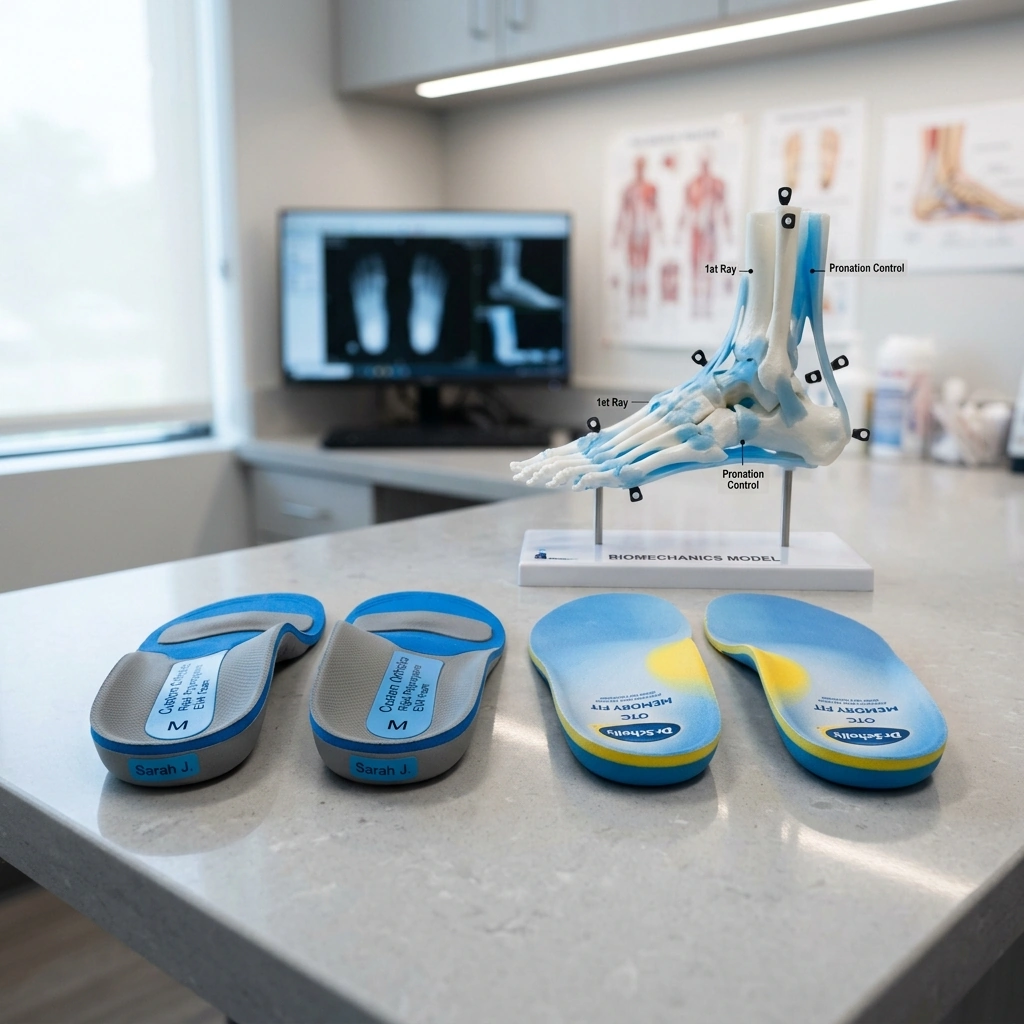
3D custom-scanned arch supports with integrated metatarsal pads that spread metatarsal heads apart, immediately stopping nerve pinching.
Targeted localized anti-inflammatory or sclerosing injections to calm severe nerve irritation and reduce soft-tissue perineural swelling.
A structured, multi-phase treatment plan combining biomechanical correction, activity modification, and progressive offloading—designed to restore pain-free mobility without invasive procedures.
Personalized shoe prescriptions, wide toe-box recommendations, and specialized athletic lacing techniques for runners and active adults.
Direct clinical care from Dr. Neha Delvadia, DPM, a dedicated foot and ankle specialist serving Marietta, East Cobb, and North Atlanta.
We design custom conservative treatment journeys to offload nerve pressure, calm inflammation, and restore pain-free walking.
Dr. Delvadia performs a physical exam, applying lateral compression to identify the exact intermetatarsal nerve space causing pain.
Digital X-rays evaluate bone alignment and rule out occult stress fractures, capsulitis, or metatarsophalangeal joint pathology.
Precise 3D digital scans capture your arch contours and specify custom metatarsal domes to separate compressed nerve pathways.
Receive customized padding, injections if needed, and long-term orthotics. Dr. Delvadia closely tracks your progress, determining if surgical nerve decompression or excision is warranted if conservative care does not fully relieve symptoms.
Morton's neuroma is a painful condition characterized by the thickening and irritation of the tissue surrounding one of the digital plantar nerves leading to your toes, most commonly in the third intermetatarsal space between the 3rd and 4th toes. It is caused by chronic compression and friction against the nerve, frequently triggered by tight or narrow footwear, high heels, flat feet, high arches, or repetitive athletic impact from running or tennis.
As the irritated plantar nerve becomes chronically inflamed, a fibrous sheath (perineural fibrosis) builds up around it. When bearing weight, the enlarged nerve bundle is compressed between the adjacent metatarsal heads, creating the distinct tactile sensation that you are stepping on a marble, folded sock, or pebble.
Read Dr. Delvadia's in-depth clinical guide on the phantom pebble sensation & non-surgical relief →
Yes! More than 85% of patients with Morton's neuroma experience complete symptom resolution without surgery through custom prescription orthotics with metatarsal pads, footwear modifications with wide toe boxes, temporary offload taping, and targeted in-office injections. If severe symptoms persist after several months of conservative care, Dr. Delvadia evaluates surgical options (such as nerve decompression or neurectomy) for permanent relief.
Custom orthotics designed for Morton's neuroma incorporate a specialized metatarsal pad (or dome) positioned just behind the ball of the foot. This pad elevates and spreads the metatarsal bones apart during walking, opening up the intermetatarsal space and eliminating the mechanical pinch on the nerve.
You should schedule a professional evaluation if you experience persistent burning, numbness in the toes, pain that interferes with walking or exercise, or the feeling of a lump under your foot that lasts more than a few days. Early intervention prevents permanent nerve fibrosis and numbness.
Sharp, shooting, or burning pain between your toes—most often between the 3rd and 4th toes—is the hallmark sign of an irritated intermetatarsal nerve (Morton's neuroma). With every push-off step, tight footwear or collapsing forefoot arches squeeze the metatarsal bones together against the deep transverse ligament, compressing the nerve and sending radiating burning or electrical shocks into the toes.
Metatarsalgia is a general term for inflammation and bruised aching directly beneath the metatarsal heads (ball of the foot), whereas Morton's neuroma is specific nerve compression between the toes that causes burning, tingling, numbness, or a phantom pebble sensation. Because both conditions require different offloading strategies, Dr. Delvadia uses Mulder's click testing and in-office digital X-rays to rule out stress fractures, capsulitis, and joint arthritis before designing your treatment plan.
Dr. Neha Delvadia, DPM provides comprehensive in-office Morton's neuroma evaluations, digital X-rays, custom orthotic scanning, and targeted injections at our primary Marietta clinic located on Johnson Ferry Road, conveniently serving patients throughout East Cobb, Roswell, and Metro Atlanta.
Explore in-depth guides authored by Dr. Neha Delvadia, DPM on nerve compression, ball-of-foot offloading, and custom prescription orthotics.

Feeling a phantom pebble, marble, or bunched sock under your toes? Learn why changing shoes and resting fail, and how targeted non-surgical care resolves nerve compression.

Discover why OTC retail inserts break down in months while 3D laser-scanned custom orthotics with precision metatarsal pads offload compressed forefoot nerves.